You slept eight hours, yet you woke up feeling like your brain is buzzing on low-voltage electricity. Your coffee did not fix it. Scrolling social media made it worse. Even the gentle morning sun filtering through your blinds feels uncomfortably harsh against your tired eyes. If physical rest is not reviving you, you are likely not sleep-deprived—you are sensorially overloaded.
Between managing professional demands in West Palm Beach, shuttling family through Wellington, and juggling an endless stream of pings, notifications, and social commitments, modern life rarely grants your senses a true pause. Your nervous system is constantly receiving, cataloging, and responding to stimuli. True recovery requires sensory rest—a deliberate, structured reduction of external sensory input that allows your overstimulated brain to step down from perpetual alert.
What Is Sensory Rest and Why Do Women Need It?
Sensory rest is the intentional reduction of visual, auditory, tactile, and environmental input to give your central nervous system time to recover from chronic sensory overload. Unlike sleep, which restores physical cellular energy, sensory rest actively unburdens your sensory processing centers so your body can shift safely out of fight-or-flight mode.
In my practice treating clients across Wellington, Royal Palm Beach, and Palm Beach Gardens, I frequently see high-achieving women who hold an invisible, vibrating tension in their shoulders and jaw. When we talk about their routines, they often tell me they relax by watching television with their phone in hand, or by listening to an intense podcast while power-walking through the neighborhood. While these activities feel passive, they continue to bombard the reticular activating system in your brainstem with light, sound, and narrative conflict.
Women carry a disproportionate mental load, regularly coordinating family schedules, domestic logistics, and careers. When you add South Florida’s bright glare, roaring air conditioners, and the relentless stop-and-go traffic along Southern Boulevard, your nervous system remains stuck in a sympathetic state. Practicing regular sensory rest resets that baseline, protecting you against irritability, cognitive fatigue, and chronic burnout.
How Can You Create an In-Home Sensory Rest Ritual?
You can create an effective in-home sensory rest ritual by systematically stripping away sensory triggers—dimming blue lights, introducing silence or brown noise, and engaging in grounding somatic touch for at least twenty minutes. Setting these quiet boundaries cues your parasympathetic nervous system that it is safe to downshift.
Transforming your home into a sanctuary does not require an entire day off. It simply requires fifteen to thirty minutes of curated stillness. Here are foundational sensory rest rituals you can implement this week:
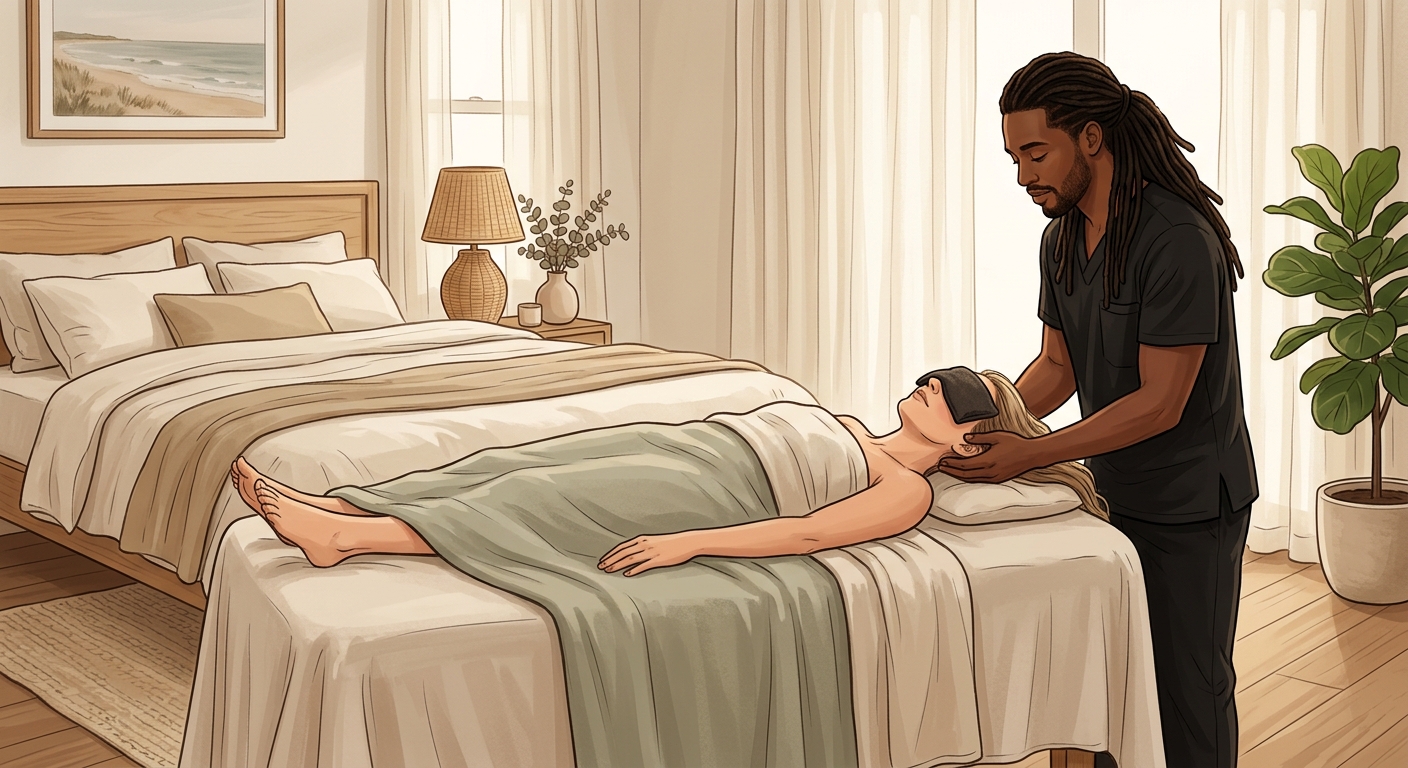
- The Visual Fast: Modern eyes rarely experience true darkness or soft focus. Spend 20 minutes in a darkened room with a weighted flaxseed or silk eye pillow placed gently over your eyelids. The gentle acupressure stimulates the vagus nerve via the oculocardiac reflex, naturally slowing your heart rate and easing mental chatter.
- Auditory Decompression: Turn off all podcasts, audiobooks, and background television. If absolute silence feels jarring or exposes the mechanical hum of appliances, experiment with low-frequency brown noise or soft ambient rainfall. Allow your auditory pathways to rest without decoding words or melodies.
- Tactile Unburdening: Change out of restrictive workwear, underwire bras, and synthetic fabrics. Slip into loose, breathable, natural fibers like washed linen or soft organic cotton. Remove jewelry, hair ties, and watches that exert continuous pressure on your skin’s mechanoreceptors.
- Scent Anchoring: Select one subtle, calming scent—such as roman chamomile or bergamot—diffused very lightly. When your olfactory sense registers a calming aroma consistently during quiet times, that scent becomes a neurological trigger for immediate relaxation.
The Role of Somatic Touch in Nervous System Regulation
While clearing external clutter is step one, your body often needs physical reassurance before your mind agrees to quiet down. When sensory overload turns into trapped physical bracing, intentional somatic touch provides the biological anchor your brain requires.
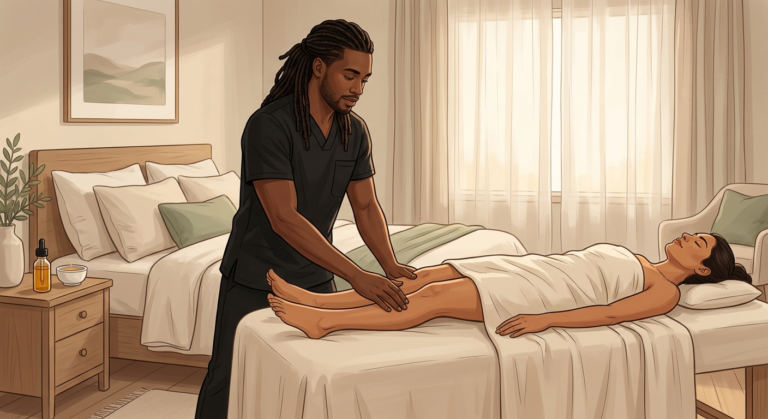
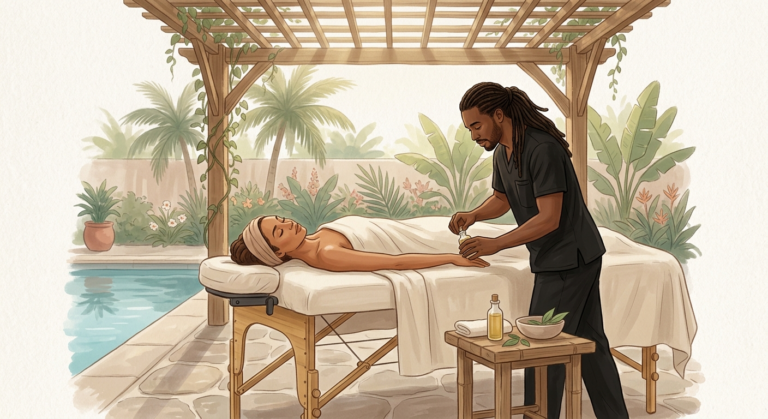
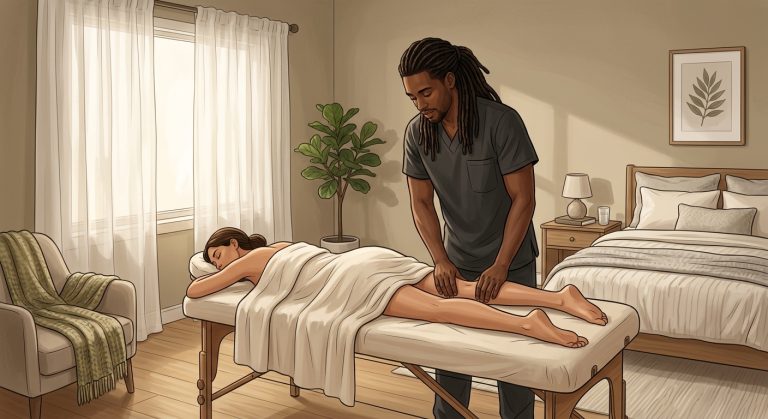
Through rhythmic, slow-paced strokes, your skin’s tactile nerve endings send safety signals up the spinal cord to the brain, halting the output of cortisol and adrenaline. In our specialized Nervous System Rescue & Burnout Recovery massage, we prioritize deep sensory grounding. By working in deliberate silence, using warm organic oils, and employing sustained, rhythmic compression, we help your body drop into the restorative parasympathetic state where real healing occurs.
Why In-Home Care Is Essential for Overstimulated Bodies
Have you ever spent an hour enjoying a relaxing treatment at a day spa, only to feel your shoulders instantly tense the moment you walked out to your car? Navigating the bright glare along Okeechobee Boulevard, battling traffic through Lake Worth or Delray Beach, and searching for parking completely wipes out the benefits of sensory relaxation.
When you invite an experienced therapist into your private space in Loxahatchee Groves, The Acreage, or Palm Springs, you preserve the calm container you worked so hard to build. You do not have to put on shoes, make small talk in a crowded waiting room, or brave the Florida heat right after a session. Instead, when the massage ends, you can remain comfortably resting in your own tranquil room, savoring the stillness for as long as your body desires.
Whether you choose a gentle sequence from our comprehensive in-home massage services or create your own daily quiet ritual, prioritize quiet sensory spaces. You cannot pour from an empty cup, and you certainly cannot heal a nervous system that never gets the chance to power down.
Ready to escape sensory overload and give your nervous system the deep rest it deserves?