
Perimenopause brings a profound wave of physical and emotional shifts as your body navigates fluctuating estrogen levels. You might be experiencing sudden joint aches, frustrating sleep disruption, and a heightened sense of stress that feel entirely new and overwhelming. Rather than viewing this hormonal transition as something to simply endure, you can approach it as a pivotal life stage that calls for deeper, more intentional self-care. In-home therapeutic massage offers a highly effective, natural way to regulate your nervous system, alleviate physical discomfort, and reclaim your sense of well-being right in the comfort of your own space.
How does massage help with perimenopause symptom management?
Massage therapy helps manage perimenopause symptoms by regulating cortisol levels, reducing joint stiffness, and improving sleep quality during hormonal transitions. It provides a natural, empowering tool to calm your nervous system as estrogen levels fluctuate.
In my practice treating clients in Royal Palm Beach and Wellington, I frequently see women struggling with the invisible toll of this transition. When your hormones are in flux, your body’s stress response often becomes hyperactive. This means your adrenal glands produce more cortisol, the primary stress hormone. Elevated cortisol not only exacerbates anxiety and mood swings but also amplifies physical pain. Massage therapy directly combats this by lowering cortisol and boosting the production of serotonin and dopamine—your body’s natural mood stabilizers and pain relievers.
By bringing the body out of a ‘fight or flight’ state and into a ‘rest and digest’ state, massage gives your system the break it desperately needs. This allows your body to better adapt to the changes it is undergoing, providing robust perimenopause symptom management without relying solely on clinical interventions.
Why do my muscles and joints ache during perimenopause?
Muscle and joint aches during perimenopause are primarily caused by dropping estrogen levels, which naturally reduce joint lubrication and increase systemic inflammation. This hormonal shift leaves your soft tissues more vulnerable to tension, stiffness, and chronic pain.
Estrogen acts as a natural anti-inflammatory and helps maintain fluid in your joints. As these levels rise and fall unpredictably during perimenopause, many women experience a sudden onset of musculoskeletal pain. It is incredibly common to wake up feeling stiff, even if you haven’t changed your exercise routine. When I visit clients in West Palm Beach and Jupiter, they often describe this sensation as feeling like their bodies aged a decade overnight.
Therapeutic massage targets this specific type of pain by increasing localized blood flow, manually flushing out inflammatory byproducts from the muscle tissues, and stimulating the production of synovial fluid to lubricate stiff joints. Regular sessions help maintain your mobility and keep the soft tissues supple, making daily activities significantly more comfortable.
The Connection Between Sleep Disruption and Hormonal Transition Care
One of the most disruptive symptoms of perimenopause is poor sleep. Night sweats, racing thoughts, and general discomfort can make a full night’s rest feel impossible. Unfortunately, poor sleep creates a vicious cycle: it increases inflammation and stress, which in turn makes your perimenopause symptoms even worse.
Massage is a powerful intervention for sleep hygiene. The deep relaxation achieved during a session helps reset your circadian rhythm. For women managing demanding schedules in Palm Beach Gardens or navigating family life in Loxahatchee Groves, setting aside time for bodywork can be the difference between waking up exhausted and waking up restored. The physical touch of massage stimulates the vagus nerve, which significantly lowers your heart rate and prepares your brain for deep, restorative sleep.
Best Massage Approaches for Wellington Women’s Health
Not all massages are created equal when it comes to hormonal transition care. Depending on your specific daily symptoms, different modalities can provide targeted relief. Here are the most effective approaches for navigating perimenopause:
- Relaxation Massage: Gentle, flowing strokes designed to soothe the nervous system. This is ideal for days when you feel emotionally overwhelmed or are struggling with insomnia. You can learn more about how this approach helps on our Classic Relaxation page.
- Nervous System Rescue: When fatigue and stress compound, your body needs a complete reset. Specialized burnout recovery focuses on gentle stretching and targeted pressure to release deeply held tension. If you feel entirely depleted, consider exploring our Nervous System Rescue service.
- Targeted Neck and Shoulder Work: Hormonal stress frequently manifests as ‘armor’ built up around the upper back, shoulders, and jaw. Focused work in these areas relieves tension headaches and prevents chronic postural pain.
Creating Your Wellness Sanctuary at Home
During perimenopause, your energy levels are precious. The last thing you need is the added stress of navigating traffic, finding parking, and rushing to a spa appointment. Whether you are coming home from a long day in Palm Springs, managing a busy household in The Acreage, or unwinding in Lake Worth, bringing the massage directly to your home preserves your peace.
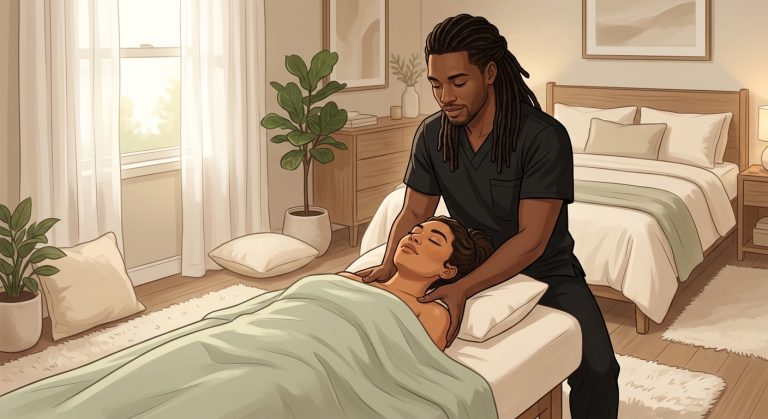
In-home mobile massage allows you to transition straight from the massage table to your couch or bed, maximizing the therapeutic benefits. When I set up my table in a client’s home—whether it’s a cozy living room in Boynton Beach or a quiet bedroom in Delray Beach—my goal is to turn that space into a temporary sanctuary where you are the sole focus.
Embracing This Chapter With Compassion
Perimenopause does not have to be a phase you quietly suffer through. It is an invitation to listen more closely to your body and give it the supportive care it requires. Prioritizing your physical comfort and mental peace through regular massage therapy is a profound act of self-advocacy.
You deserve to feel at home in your body as it evolves. By investing in hormonal transition care, you are laying a strong, resilient foundation for the years ahead.