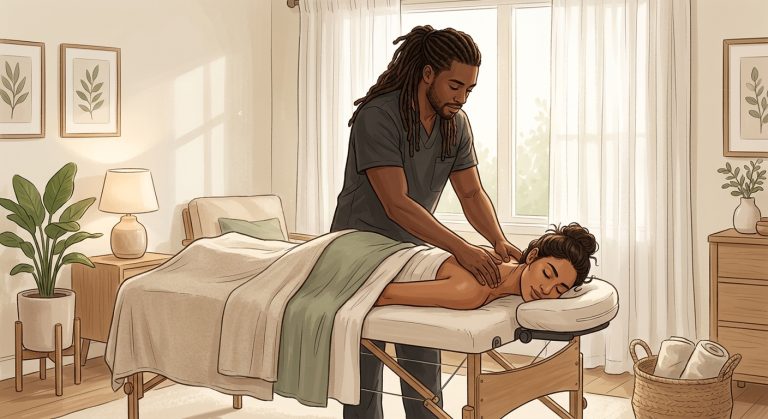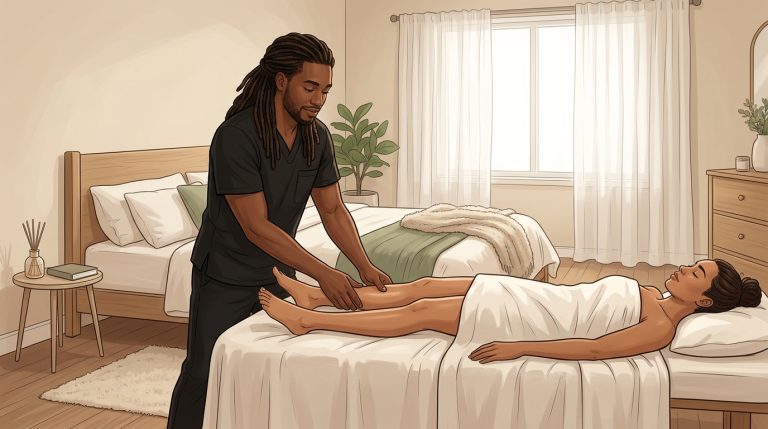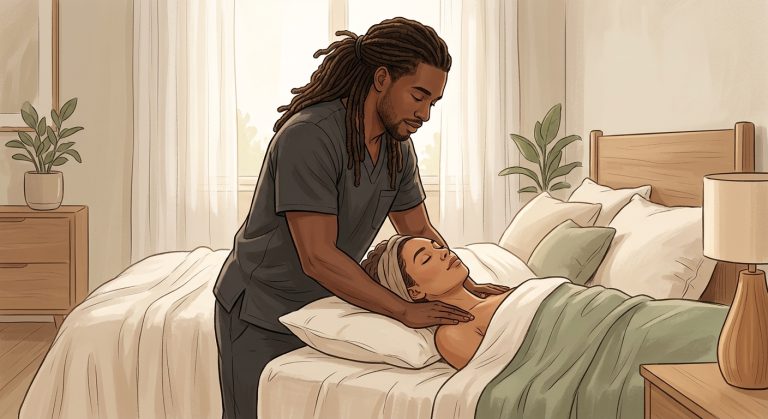
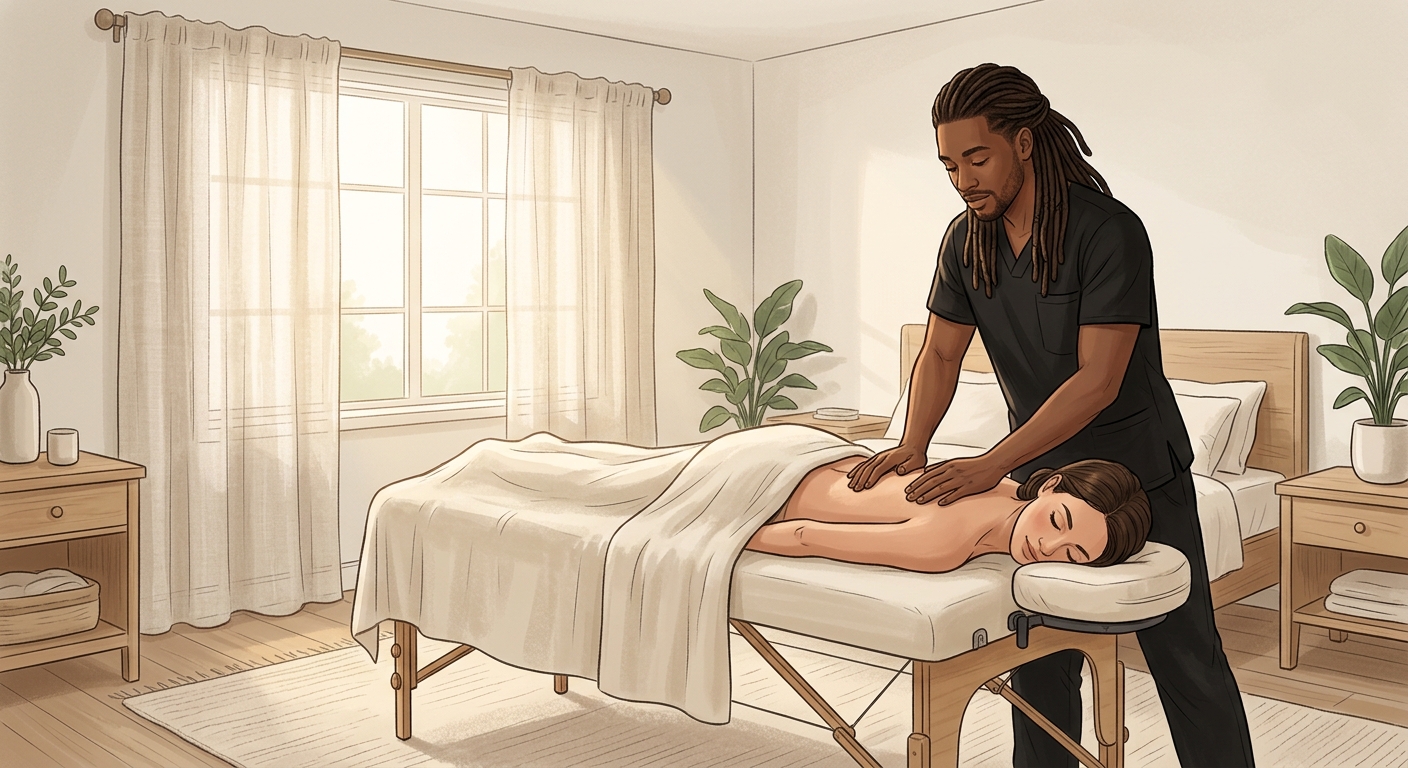
If you have ever gotten off a treatment table feeling black and blue, you may have been told that soreness and dark marks are simply “the knots leaving your body.” In my practice treating clients across Royal Palm Beach and Wellington, I frequently hear from women who believe deep bodywork has to hurt to work. You might have even worn bruises like a badge of honor after a session, assuming your therapist broke through stubborn muscle adhesions. Let’s set the record straight: bruising is not a marker of therapeutic success—it is a physiological distress signal.
Is Bruising After Massage a Sign of Healing?
No, bruising after a massage is not a sign of healing; it indicates broken capillaries and vascular microtrauma caused by excessive mechanical force. True therapeutic progress occurs when your nervous system feels safe enough to unwind chronic tension, not when tissue is forced into submission.
When bodywork pushes past your biological tolerance, delicate subcutaneous capillaries rupture beneath the skin. The blood pools in the interstitial spaces, leading to the familiar purple and yellow discoloration. Far from releasing tension, this traumatic disruption forces your immune system into an acute inflammatory rescue response. Instead of recovering from chronic stress or postural strain, your body must expend vital metabolic energy repairing newly created cellular damage.
What Causes Tissue Bruising During Bodywork?
Bruising occurs when sudden, localized shearing pressure compresses blood vessels against underlying bone faster than tissue can adapt. This aggressive force overrides neuromuscular reflexes, triggering acute inflammation rather than restorative tissue remodeling.
Therapeutic pressure misconceptions often stem from the old-school sports clinic philosophy that tight muscles must be kneaded like bread dough. In reality, skeletal muscle is living sensory tissue governed entirely by your central nervous system. When excessive force is driven into guarded muscles, several counterproductive reactions happen:
- Neurological Bracing: Your muscle spindle cells perceive deep, sudden friction as an injury threat. Instead of relaxing, the muscle fires a reflexive contraction to protect your joint structures.
- Capillary Rupture: Pushing through guarded tissue squashes fragile blood vessels against dense fascial sheets, creating internal contusions.
- Secondary Fascial Tightening: As microtrauma heals, the body lays down disorganized collagen fibers—often making the treated area stiffer over time than it was before your appointment.
Debunking the ‘No Pain, No Gain’ Myth in Modern Bodywork
The belief that restorative massage must feel excruciating is outdated and clinically counterproductive. When delivering bespoke deep muscle restore deep tissue sessions to clients in Palm Beach Gardens, Jupiter, and The Acreage, my priority is communication between therapist and tissue. True depth in bodywork is measured by neurological melting, not elbows ground into bone.
Fascia, the connective tissue web wrapping your muscle fibers, contains thousands of sensory receptors. When a therapist works slowly, honoring the breath and pausing at the barrier of resistance, these receptors signal the autonomic nervous system to downshift. Tension releases from the inside out. When bodywork respects your boundaries, deep layers of chronic restriction melt away without leaving behind a constellation of contusions.
Why In-Home Restorative Therapy Honors Your Nervous System
Healing doesn’t happen during a state of high alarm. When you are rushing through South Florida traffic or trying to beat rush-hour congestion from West Palm Beach to Delray Beach, your nervous system is already in sympathetic overdrive. Aggressive pressure administered on top of daily stress only compounds fatigue.
Choosing premium in home bodywork Palm Beach clients can trust transforms the therapeutic equation. In the tranquil comfort of your own living space—whether you are unwinding in Boynton Beach, Lake Worth, Palm Springs, or Loxahatchee Groves—your body starts in an environment of inherent security. There is no rushed clinical checkout, no loud lobby, and no need to drive home sore. Your nervous system is primed to accept therapeutic pressure smoothly, eliminating the protective muscle clenching that so often leads to bruising in rushed settings.
What Should You Feel After an Expert Massage?
While deep postural realignment can occasionally produce mild muscular soreness akin to an invigorating yoga class, your post-session experience should leave you feeling grounded, open, and mobile. Here is what healthy, non-traumatic tissue release feels like in the days following treatment:
- Spaciousness and Mobility: You should feel greater ease in turning your neck, squaring your shoulders, and taking full diaphragmatic breaths.
- Postural Lightness: Chronic trigger points feel quieted and diffused rather than raw, throbbing, or acutely sensitive to the touch.
- Deep Rest: Your sleep quality improves dramatically as sympathetic nervous tension transitions into restorative parasympathetic relaxation.
If you notice purple or dark blue discoloration after a session, your bodywork was likely too aggressive. Healing is not a battle between therapist and tissue; it is a collaborative conversation grounded in anatomical intelligence and respect for your body’s innate wisdom.
Ready to experience profound muscle relief without bruising, pain, or the stress of clinical commutes? Let restorative luxury come directly to your living room.